

Children are thrown into a world of chaos, a world where they must learn to maneuver the ins and outs of society while still trying to stay true to themselves. But what does staying true to themselves really mean?
When a child is between about the ages 0-5, they find friends in whoever they can have a laugh with — being that of same sex or opposite sex. Children in early stages of development don’t know the difference between girls and boys and are only focused on the concept of having fun. However, as children begin to grow, they begin to internally develop what it means to be a boy and what it means to be a girl. It is then at this stage when they begin to segregate themselves from playing with each other. Once this occurs, boys are then teased if they begin to play with girls, often being called a sissy or being accused that they are gay and girls are teased when playing with boys, often being associated with the word tomboy.

Through the process of peer relations we can see such gender differentiation. Boys begin to employ physicality while girls employ domesticity. It is through this process when girls are playing house and boys are playing with vehicles that the reinforcement of gender stereotypes are constantly being reinforced — girls belong in the kitchen and boys belong elsewhere
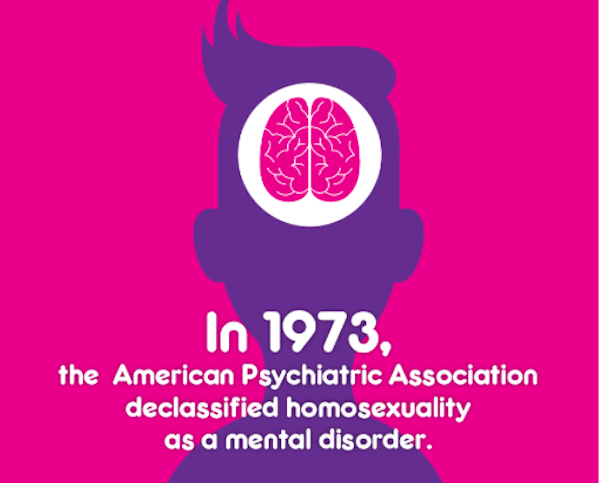
However, what is unclear to young children is that all these notions are derived from societal’s norms from a curriculum put into place in 1998. This notion and curriculum only accounts for the “traditional” way of being and does not include gender identity as one of its platforms. Also, this curriculum doesn’t make any mention of other communities with relations to sexual identity or LGBTQ. In fact, until 1973 homosexuality was viewed as a disorder cured by reparative therapy. When views like this come into play and when school curriculum doesn’t address these issues, children must learn from their parents. However, when many of today’s parents grew up in the 1970’s and before, their education is limited to teaching children about gender identity and things like sexual identity.
Up until 2015 when a new curriculum was set in motion, children were subject to learning taboo material from sources outside of school. However, as many of us know, parents don’t teach taboo topics to their children, they’d rather have it taught at school. The 2015 curriculum introduced taboo topics that were not being taught previously, with examples of LGBTQ, consent, same-sex marriage, transgender youth and gender identity. Without the teaching of these topics, our society will continue to be neglecting certain identities and rights that youth have, we are continuing to make our generation an ignorant one.

In fact, until 2013, transgender was seen as a gender identity disorder. When we view people’s choice to be who they want to be as a disorder, we are denying them basic rights. With the new curriculum, we form an inclusive society that allows for gender identity to be an open topic that everyone should feel included in and should not be subject to demeaning terms.
As of July of 2018, Doug Ford has revoked the 2015 version of the curriculum, and reverted back to our 1998 version. In doing this, children will be continued to be taught that being who you are, whether that be homosexual, transgender etc is wrong. Not wrong in the sense that they teach it that way but wrong in the sense that they are not being educated on those topics — misleading children and teaching them only of “traditional” ways of how boys and girls should be. This version of the curriculum is from 20 years ago, as times change, so does society and we should be able to move with the times, not be stuck in something that is two decades old. As we revoke back to this version, gender will continue to be a taboo topic, something that children will continue to hide behind. We view gender socialization as an act of internalizing gender and conforming to gender norms. When we allow for this to happen, we are denying the rights to youth to choose who they want to be.

Click This Link to View: Rally About Sexual Health Curriculum July 2018
According to theorist Judith Butler, gender identity is viewed as an impossibility — people identify us as they see fit and place us into a gender category. However, if we were equipped with knowledge growing up to see past these fixed ideas that society has placed on us, we could see how so many youth are more than what someone else categorizes their gender as. With the 2015 sex-ed curriculum, it encompasses the idea of gender in a much broader way than the 1998 version.
The 2015 curriculum on sexual health education allows for inclusivity, the 1998 version leads us into exclusivity and should not have been revoked. Children are not too young to learn about themselves and their rights.
 The Matter of SHE